

It’s junior year and you’re sitting in a chair in your guidance counselor office. You just got hit with a lingering question – do you know what you want to pursue in life? Yes, the guidance counselor’s office just got interesting. Little do you know, you’re about to make a life changing decision. A decision that often involves a considerable amount of thought process and planning.
So, to answer this tricky question, start off by evaluating yourself. Dig deep and ask yourself, what are my personality traits, interests and hobbies that I enjoy? What am I passionate about in life? What industry and field can I see myself working in for 50 years? These questions are the foundation of a rewarding career. A personality/career assessment test can help you out. Here is a free test you can try Career test – Fast Free Career Aptitude Test. Also, a great chat with your guidance counselor can give you some ease.
You want to be involved in a career that you know deep down, this what you’re meant to do. When you wake up in the morning, you have that refreshing feeling going to your respective place of employment. You know this is what you’re meant to do! For example, you have a passion for helping people, don’t like injuries, empathetic and detailed-oriented. Entering the medical field can be the perfect match.

You only have so many hours in the day, you want to fulfill them with something you’re passionate about.
So here comes the next round of questions, do I pursue a trade school, college, university, my own business? This task involves a major financial commitment so you’re really going to have to do some thinking. If higher educational is on your radar, take a look at some of the questions you should answer.
- Do I want to stay close to home (domestic) or go out of state?
- How prepared (mentally and physically) to be on my own?
- What degree and major do I want to pursue? Ex. Do I want to pursue an associate or bachelor’s degree? Do I want to pursue an undergraduate degree and then further my education in the future (bachelor’s, master’s or doctorate)?
- What is my budget? What are the options for scholarships, financial aid, government assistance, grants, student aid, student loans and other financial assistance?
- What is the application process? What information do I need to provide? What are the application costs?
- What standardized tests (PSAT, SAT) do I have to take? How should I prepare for them?
- Do I prefer online or on-site learning?
- Do I prefer rural, city, or abroad?
- Do I want to go to a school that provides dormitory, apartments or relative housing?
- If I live outside my home, how comfortable am I with roommate(s)?
- Will food be provided (cafeteria, food services) or do I have to supply my own food?
- If I have to supply my own food, what essentials will I need? (Ex. small refrigerator, shopping, microwave, portable stove top).
- What are the essentials I need to budget for (ex. small refrigerator, laptop, clothes, furnishings)?
- Any incentives? Ex. school discounts on food, clothing, transportation costs, extracurricular activities?
- Do I prefer class sizes that are small/intimate or large?
- Do I plan on working while going to school or just concentrate on my studies?
- Do I want to go to school that has the best reputation?
- What is the available internship/career service opportunities?
- Activities at school?
- Social atmosphere?
- Transportation and the costs?
- How important is academic/sports/community involvement to me?
You’re about to make a major investment in your life. I want these questions to be your personal guidebook in this investment. I want to make sure you cover all bases ahead of time. Planning is key in life. You can avoid a lot of headaches by knowing your direction. Just want to expound on a few of these questions and offer some tips that will help you prepare.

Why can’t things in life be free
Throughout this article, I sound the alarm on costs because I don’t want it to be an issue for you. I want you to plan now and weigh all your options that will fit your budget. Research and explore all financial opportunities that will help reduce costs. There are many financial assistance programs available for you. Pursue them persistently and ahead of time.
Also, make sure your credit is in excellent standing. Make this a lifetime habit! Pay your bills before and on time. Never max out your credit cards and stay on top of paying your student loans/debts. Check your credit score often to avoid scams and debt that you didn’t occur. These are the keys to having a great credit score and financial stability! Make sure your credit is clear to avoid any issues obtaining student loans or other financial assistance.
Room with a view
After you’ve tossed your cap in the air after high school, you realize things are about to be different. That, you’re about to be on your own. If you have plans of living on your own and entering higher education, nervousness might come into play. To help combat these nerves, do some self-reflection. To help, examine yourself by answering these questions:
How mentally and physically am I prepared for this transition?
What gets me into a more positive frame of mind?
What are my personality characteristics?
My likes and dislikes?
Why am I nervous?
How can I spin this nervousness around into more of hey, I am actually more excited?
Can I ask the school if there is an opportunity to walk through the campus beforehand? Can I sleep overnight to get a feel of the atmosphere?
To help combat these issues, go back to a past situation where you were nervous. Examine and pick out what helped you overcome these nerves. Also, stick to whatever gets you stick to a positive mindset. Can be a favorite song, hobby, quote, movie scene, or personal hero. Just stick to it and you will be alright. Pursuing something that you’re passionate about will also help you live every moment as the best.
You can also seek advice from others – your family, friends and network about their experiences. Seek out any online communities or YouTube videos of people who have journeyed on their own. My tip is to prepare ahead of time. Examine your own personality and find out what makes you comfortable. For instance, if you’re a neat freak, how comfortable are you rooming with someone who is messy? Also, you’re a light sleeper and your roommate is a party animal, how will you cope? These are the questions to keep in mind.
You’re going to interact with all types of personalities so, reflecting on all types of scenarios will help you. Having a good meaningful conversation with your roommate(s) ahead of time is a good start. Get to know their traits, likes, dislikes, attitudes, schedules, hobbies, and goals. This can help with any issues if all parties come to a compromise. Setting some “ground rules” is a good foundation for comfortable living for everyone involved. With these tips, you should have an amazing living experience. Prep is the key!
Time for Research
Set some time for online research. Have an outline of questions you want answered to make your decisions. Of course, if there is any hesitancy (if information is up to date), contact the school services directly. It is vital to have the correct information so there aren’t any surprises on your end.
If you have any questions, never hesitate to send an email or reach out via social media. Reach out to the schools contact us page, frequently asked questions section, blogs, and social media pages for your answers. Also, seek trade publications, industry news, and academic forums for support.
Document all your information and make sure it is kept in a safe place. Invest in a journal or use Microsoft Word or Google Docs. Track and set goals/deadlines for yourself (to keep motivated and accountable). For instance, a goal can be contacting two schools per month. Your objective, to seek clarifying answers to all your questions about these institutions.
If time and resources allow, you can also go on-site. Can set up a meeting with the school services and talk to the administrative officials in your preparation. Once again, the key is to prepare ahead of time. This is a major investment in which you want to take seriously to avoid any issues.
Track everything you do
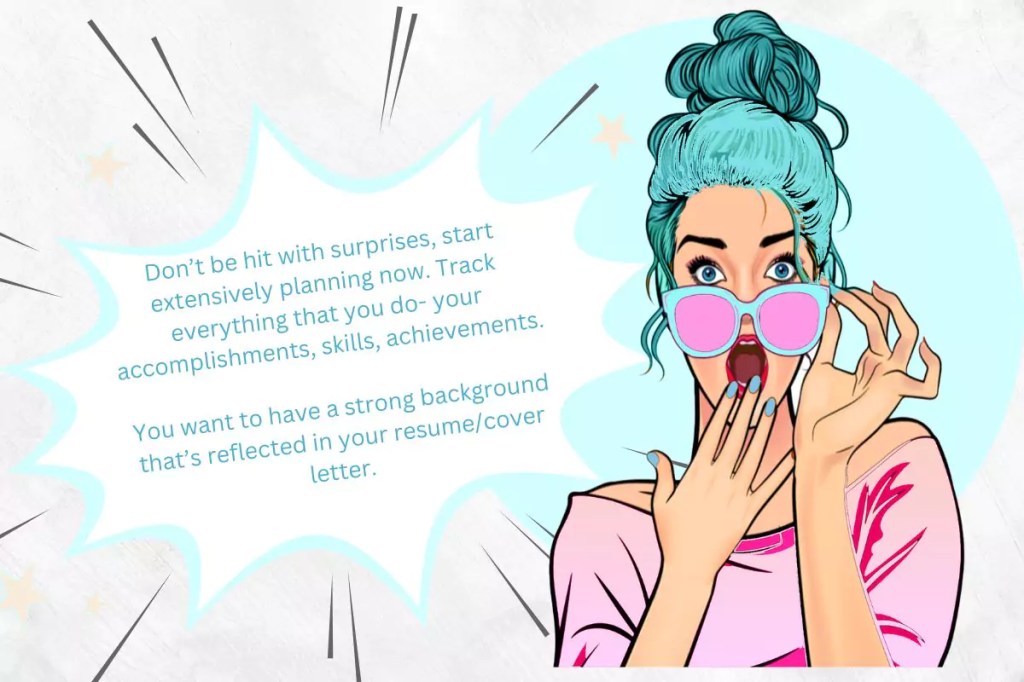
If you’re in school and you haven’t had a job, here is a great tip for you. Track everything in life. Just like a job, you want to track all your activities, responsibilities, and achievements. Any contests, school activities, skills developed, volunteer work, sports, hobbies, community involvement. Properly take note of your dates, details. and accomplishments with these activities.
These activities will help to shape your resume/cover letter (which I recommend should be done now). Keep your resume/cover letter up to date and you will be well prepared for a job and an internship.
Also, have a set of key contacts you can call on for a letter of recommendation. This will be a requirement for the school, so be prepared! Your boss/co-workers, teachers, principles, guidance counselors, friends in family or anyone close in your community network. Let your key contacts know ahead of time and give them some guidelines for the letter. You can find some guidelines online or can ask the school. Key is to prep your contacts well in advance. Everyone has a busy schedule so, giving them some time will help with any pressure in meeting deadlines.
Also, make sure your grades are in tip top shape. You can be awarded scholarships, grants and other incentives that can help you with higher education. These incentives are just the tip of the iceberg.
Your main motivation for having “great grades” should be because you want to achieve. That it’s a rewarding feeling to do your very best. To set your standards to achieve high excellence. Whatever you do, you will give it your all. I highly recommend adopting and keeping this type of “achiever’s mindset” throughout your entire career. Start now by shaping yourself into the leader you want to be once you move on from high school. Set plans, schedules, goals, and strategies. Work on skills, get involved in challenging activities and develop a growth and development mindset.
This is a good starting base for pursuing a life after high school. The key is to start now. What are you passionate about? What in life do you want to grab and take off with? By reflecting and answering all the questions in this article, you should be on the correct track. Don’t let anything be a deterrent in life. Everyone has unique gifts and passions; you’re gifted to rock a trade! Give it your all. Pursue all available opportunities and stay motivated.
If you feel something isn’t working, feel free to explore something else but the key thing, please pursue your passions. Work hard, plan ahead of time, track, set goals, have aspirations, keep developing and learning and stay positive! You will have a rewarding career and life.
My next article will go more in depth on some of the questions outlined. Make sure to bookmark this article and subscribe for future updates.
If you’re in school and looking for the perfect educational/career resource, please take a look at WE CONNECT THE DOTS. It’s an exciting site that focuses on Sciences, Technology, Engineering, Arts and Math. They focus on providing a variety of remarkable social programs for young people (13-18) and adults over 18. What’s the best, these students come from all around world. Building connections that are transforming the global landscape. Who said age is a factor? So please take a look, you won’t regret!
So where are you in your educational endeavors? What are your goals, aspirations and dreams in life? Do you have a plan or idea for post high school? Do you have any relatable advice or experience that you would like to share? Let me know in the comments below!
Newsletter
Sign up today to stay on top of the latest lifestyle tips, advice and stories crafted for you!
 Musings of Life
Share your thoughts, eager to hear them!